Lonely Planet’s Best in Travel: top 10 countries for 2012
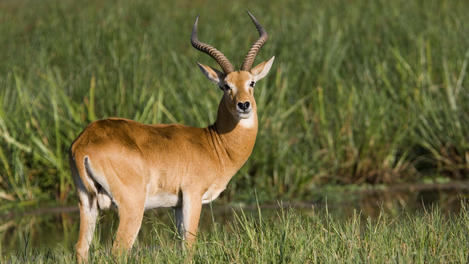
1. Uganda
It’s taken nasty dictatorships and a brutal civil war to keep Uganda off the tourist radar, but stability is returning and it won’t be long before visitors come flocking back. After all, this is the source of the river Nile – that mythical place explorers sought since Roman times. It’s also where savannah meets the vast lakes of East Africa, and where snow-capped mountains bear down on sprawling jungles. Not so long ago, the tyrannical dictator and ‘Last King of Scotland’ Idi Amin helped hunt Uganda’s big game to the brink of extinction, but today the wildlife is returning with a vengeance. This year Uganda also celebrates the 50th anniversary of its independence; Kampala, one of Africa’s safest capital cities, is bound to see off the event with a bang. Still, Uganda still isn’t without its problems. Human rights abuses aren’t uncommon, and the country breathes a collective sigh whenever President Museveni thinks of another ruse to stay in power for a few more years. But now, as ever, explorers in search of the source of the Nile won’t leave disappointed.Travel alert: Lonely Planet refers would-be travellers to Uganda to the UK Foreign & Commonwealth Office travel advice on the country:
“There is very little social tolerance of homosexuality, which is illegal. There have been moves, initiated by a Ugandan MP, to introduce reactionary legislation that would further criminalise homosexuality and introduce the death penalty for some activity… you should be aware that homosexuality is generally seen as taboo and exists on the margins of society.”
Travel to areas of northeastern Uganda is not recommended – seek specific advice if you are seeking to travel to Kidepo Valley National Park.
2. Myanmar (Burma)
‘We want people to come to Burma.’ That’s the words of the National League for Democracy (NLD), the opposition party that has urged foreigners to stay away since 1996. This changed in late 2010, when the NLD revised its boycott to encourage independent travel (as opposed to package tours) following the release of Aung San Suu Kyi, who had spent 15 of the past 20 years under house arrest. As a result, Myanmar is set to be a hot new destination for independent travellers. Rimmed by mountains and white-sand beaches, the kite-shaped country’s most accessible area is the centre, which is filled with timeless towns and countless pagodas, especially the 4000 examples found on Bagan’s 26-sq-km riverside plain. Beyond the attractions, there’s the fervently Buddhist locals, who might just be the world’s sweetest people. If you do go, be aware that the revised boycott doesn’t mean troubles are over.3. Ukraine
When we don’t know much about a country, we just fill in the gaps with clichés – and Ukraine, the great unknown of Europe, has had plenty hurled at it. Wide-scale counter-espionage? No, not even in Odessa. Communist grime everywhere you look? One glimpse of glorious Old Town Kiev or the wildlife on unspoilt Crimean shores will set you straight. Cheap beer? You bet: it’s cheaper than water. Football? Funny you should mention that…It’s through the power of soccer that Ukraine is poised to showcase its charms to unprecedented numbers of visitors. It will co-host Euro 2012 (the European footballchampionships) and the four match venues have been cunningly selected to encourage further travel by visiting football fans. So Lviv becomes the jumping-off point for Carpathian exploration, while Kiev, which stages the final, will become base for forays to the Black Sea coast and, yep, the grim tourist attraction that is Chernobyl.4. Jordan
The word is getting out that Jordan is not just about Petra and Indiana Jones. Yes, the ancient ‘Red Rose city’ is still the jewel in Jordan’s crown, but sights such as Wadi Rum, Jerash and Madaba are adding weight to the country’s tourism boom. One of the most open, friendly and welcoming nations in the Middle East, Jordan is an example to other states in the region of how to modernise while preserving cherished ancient traditions. This year marks the 64th birthday of the Hashemite Kingdom of Jordan, a relative baby on the global scene. Though poverty is still rife, Jordan’s economy is on the up, and its history and tourist infrastructure make it one of the most accessible Arab states for English-speaking travellers.5. Denmark
Every year, Denmark tops a ‘quality of life’ list and is revealed as the coolest/happiest/best-looking place on earth, because not only is the living easy in this small, perfectly formed country, but it’s also easy on the eye. Viking raids aside, the Danes have long tried to make the world a better place (think generous foreign aid programs and the pursuit of green technology) and they make sure that they lead by example: their homes are stylish recycling-savvy havens of hygge (a sense of contented cosiness) and their public spaces are enjoyed by all. And all you have to do is hop on your bike – literally. Countrywide, you’ll find around 10,000km of bicycle routes and some four million bikes to share them with, plus you’re rarely more than a short pedal from the bracing seaside, the picturesque countryside or an architectural delight, making Denmark the perfect place to put pedal power into practice.6. Bhutan

Image by jmhullot
Beautiful Buddhist Bhutan has always coyly shielded its charms from
the wider world, but new areas of this remarkable mountainous land are
finally opening for business. Of course, you’ve been able to visit for
years, but most tours hit the same highlights: a part-awesome,
part-terrifying flight into peak-protected Paro, a jaunt around western
Bhutan’s cultural sights, then perhaps a trek through pristine mountains
(Bhutan’s conservation credentials are exemplary). There’s no
independent travel here; itineraries are sanctioned by the Tourism
Council and guides are compulsory. But now, at last, it’s possible to
visit other parts of this famously reclusive country. Royal Manas
National Park, prowled by some of the planet’s last remaining tigers,
has reopened. And the far east, where most locals have seen more yetis
than tourists, is accessible and is getting better infrastructure. The
only downside? It’s not for those on a budget at US$200 a day (though admittedly this covers many on-the-ground costs).